Noah Müller · 23 September 2026
Beekeepers Forge Partnerships with Conservationists to Enhance Pollinator Corridors Along Coolwald's Borders
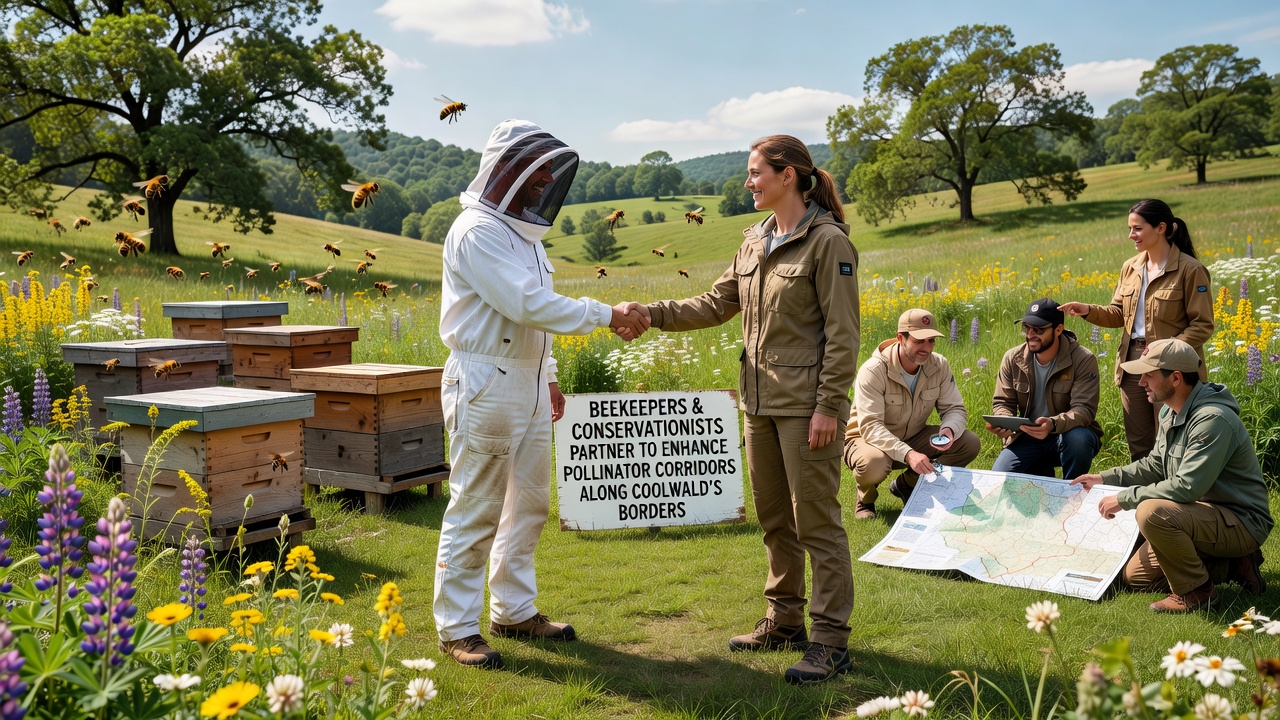
Beekeepers in the Coolwald region have established formal partnerships with local conservation groups to create and maintain pollinator corridors that stretch along the forest's outer boundaries, and these efforts focus on connecting fragmented habitats through targeted planting of native flowering species while integrating managed beehives into the landscape. Data from ongoing monitoring programs shows that such corridors support increased movement of bees, butterflies, and other insects across agricultural edges and woodland margins, which in turn aids pollination services for both wild plants and nearby crops.
Background on Coolwald's Ecological Setting
Coolwald covers a mixed woodland area in central Europe where historical land use patterns have left patches of meadow and forest separated by roads and farmland, and researchers have documented declines in native pollinator populations over the past two decades due to habitat loss and reduced floral diversity. Partnerships formed in recent years bring together apiarists who maintain hives with ecologists who design planting schemes that include species such as clover, lavender, and wild mustard chosen for their bloom times and nectar production.
These collaborations operate under agreements that specify hive placement locations, pesticide-free buffer zones, and seasonal monitoring protocols, while government records indicate that similar initiatives in adjacent regions have expanded available foraging areas by measurable percentages without conflicting with existing land management practices.
Structure of the Current Partnerships
Local beekeeping associations contribute equipment and expertise in hive health management, whereas conservation organizations supply seeds, labor for site preparation, and mapping tools that identify priority zones along the borders. One case involved a group of beekeepers who adjusted hive rotation schedules after conservationists identified peak flowering periods in newly established strips, and this coordination led to higher colony survival rates during late summer periods when forage typically dwindles.
Funding for the corridors comes from a combination of regional environmental grants and private donations channeled through established networks, and annual reports track metrics such as insect counts at fixed observation points and seed germination success rates across multiple sites. Observers note that the approach avoids large-scale land conversion and instead emphasizes linear features that fit within existing right-of-way areas and field margins.
Implementation Steps and Corridor Design
Planning begins with soil assessments and drone surveys that map existing vegetation, after which teams select plant mixes suited to local conditions and install them in strips ranging from five to fifteen meters wide. Beekeepers then position hives at intervals calculated to overlap with the new floral resources, and maintenance includes periodic mowing to prevent woody encroachment while preserving late-season blooms.
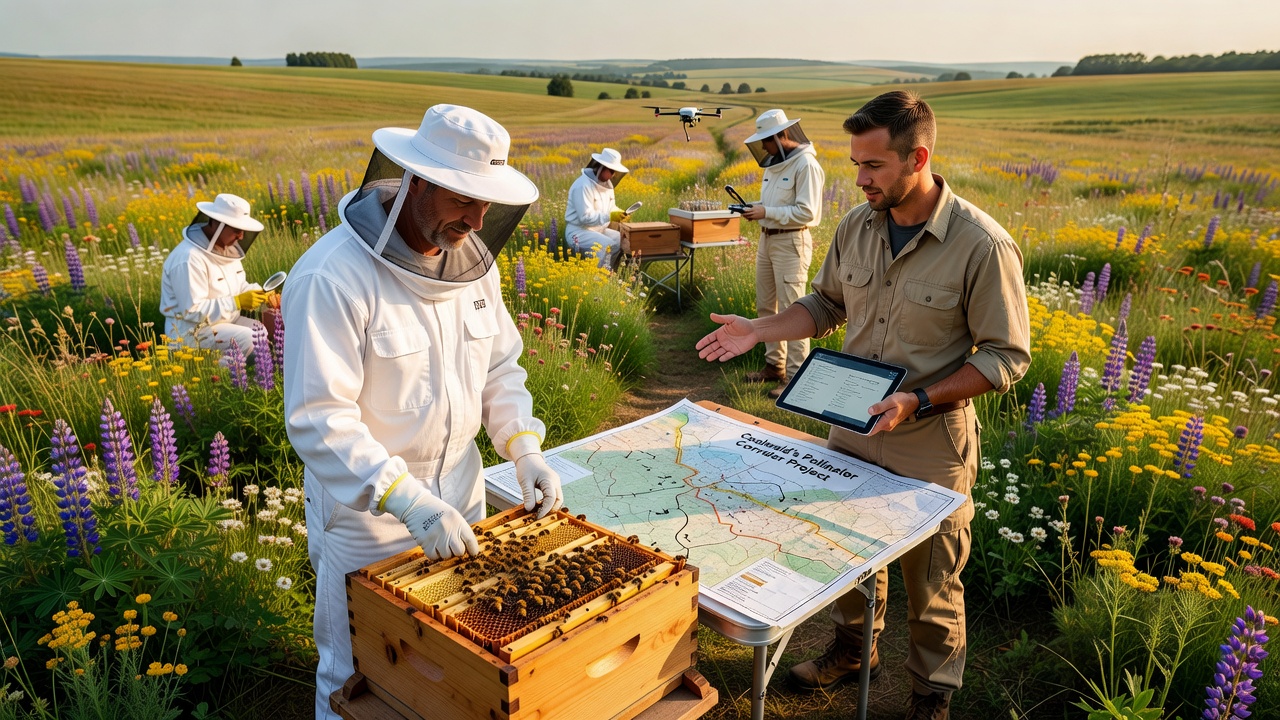
Monitoring uses standardized transect walks and camera traps that record visitation rates, and figures compiled from these methods reveal seasonal shifts in species composition that align with corridor establishment timelines. Turnout at community planting days has included both experienced apiarists and volunteers new to habitat work, which has helped distribute knowledge about best practices for avoiding hive disturbance during vegetation management.
Documented Outcomes and Broader Context
Studies compiled by the European Environment Agency indicate that connected habitat strips can increase pollinator abundance by supporting movement between resource patches, and data collected along Coolwald borders shows parallel trends in local bee diversity metrics. Partnerships have also incorporated training sessions on disease prevention in managed colonies to reduce risks of spillover to wild populations, and these sessions draw on protocols developed by research institutions across multiple countries.
Additional linkages connect Coolwald efforts to larger European biodiversity strategies that prioritize pollinator recovery, while a separate report from Environment and Climate Change Canada outlines comparable corridor projects that achieved measurable gains in butterfly passage rates through similar border plantings. September 2026 events include scheduled joint field assessments where participants will evaluate corridor performance after the summer bloom cycle and plan adjustments for the following season based on collected observations.
Challenges Addressed Through Collaboration
Landowner permissions require clear communication about restricted chemical use near corridors, and beekeepers have shared records of hive treatments that comply with buffer requirements. Weather variability affects planting success, yet teams have responded by staggering seed sowing across multiple windows and using nurse crops to stabilize soil during establishment. Coordination meetings occur quarterly to review data logs and resolve any operational questions before they affect outcomes.
Conclusion
The partnerships between beekeepers and conservationists in Coolwald continue to expand pollinator corridors through structured planting, hive integration, and shared monitoring, with results tracked against established ecological indicators. These activities align with documented approaches that support insect movement and forage availability along forest borders, and upcoming assessments in September 2026 will provide further data points for evaluating long-term effectiveness.