Zoe Weber · 7 October 2026
Tree ring analysis unveils centuries of environmental changes beneath the woodland canopy
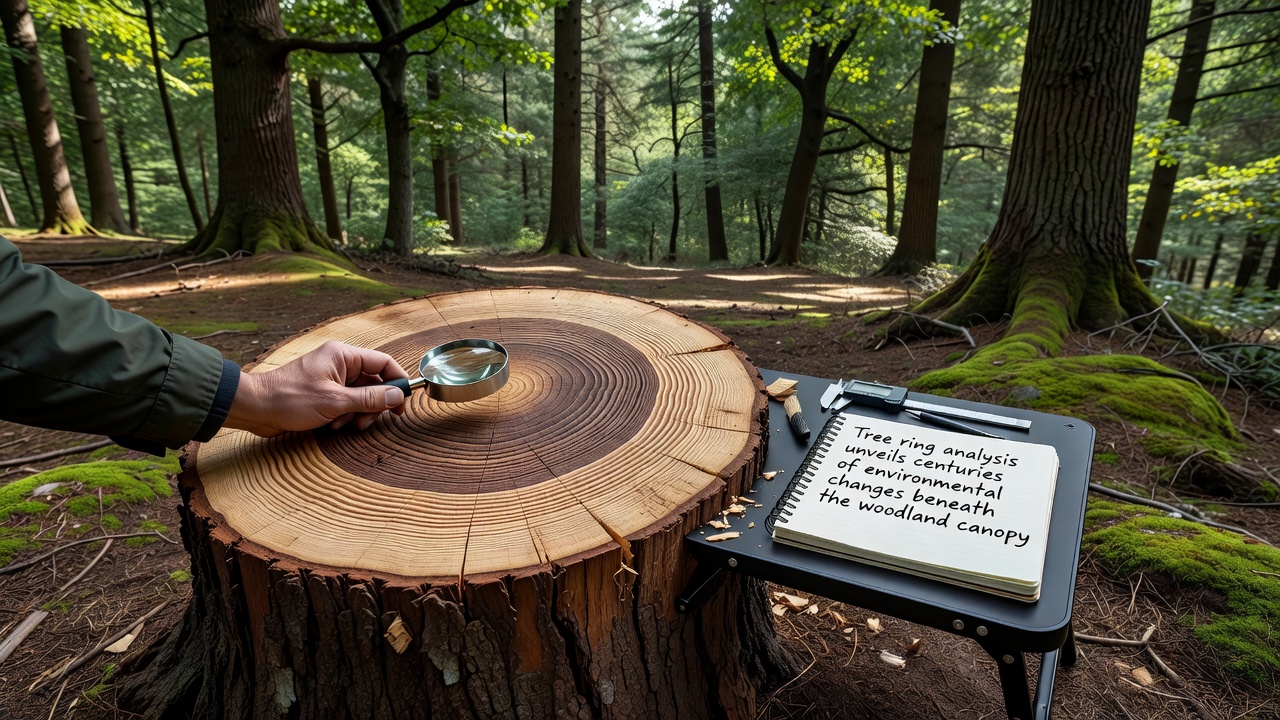
Tree ring analysis has emerged as a precise method for reconstructing past environmental conditions across centuries in forested regions like Coolwald, where growth patterns in oak and beech species record shifts in temperature, precipitation, and atmospheric composition. Scientists collect core samples from living and fallen trees, then measure annual ring widths under microscopes to build chronologies that extend back hundreds of years. These records align with historical climate data and provide continuous timelines that instrumental measurements alone cannot match.
Methods behind the measurements
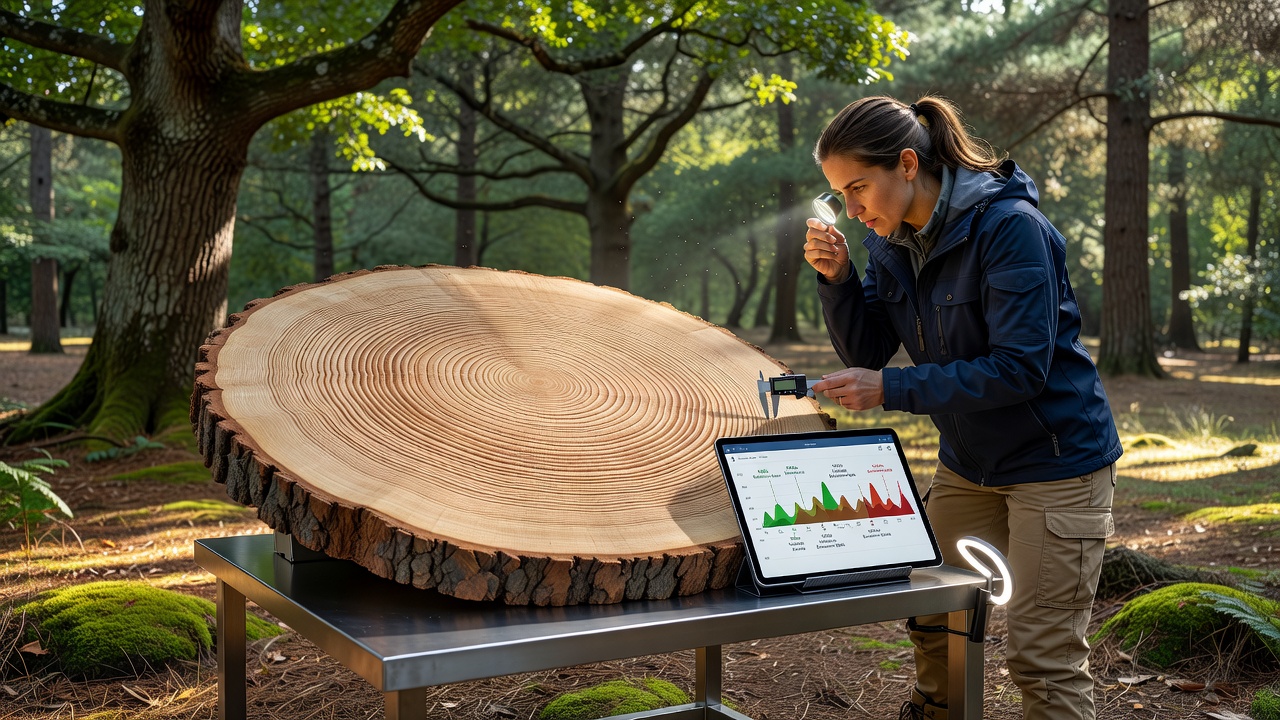
Researchers extract cores using increment borers that leave the tree intact, after which they sand the samples smooth and scan them at high resolution to identify ring boundaries. Cross-dating techniques compare patterns across multiple trees to eliminate anomalies caused by local damage or disease, while statistical models account for age-related growth trends. Data from these analyses feed into databases maintained by institutions across Europe and North America, allowing comparisons between sites. In Coolwald, teams have sampled over 200 trees spanning more than 400 years, creating a local chronology that begins in the late 1500s.
Key findings from Coolwald samples
Analysis of the rings reveals distinct periods of suppressed growth during the Little Ice Age, particularly in the 1690s and early 1800s, when cooler temperatures and reduced summer rainfall limited cambial activity. Wider rings appear during the mid-20th century, coinciding with warmer conditions and increased atmospheric carbon dioxide levels that enhanced photosynthesis rates. Narrow rings in the 1970s and 1980s align with documented drought episodes, while post-1990 patterns show recovery interrupted by occasional extreme events. These sequences also capture pollution impacts from industrial emissions in the mid-1900s, visible as density changes in latewood.
One study released in October 2026 incorporated the latest cores up to 2025 and confirmed accelerated growth rates in the past two decades, consistent with regional warming trends reported by monitoring networks. The updated chronology integrates with satellite-derived canopy data to map vertical changes in light penetration and understory response beneath older stands.
Connections to broader climate records
Comparisons with other European chronologies show that Coolwald patterns match those from the Black Forest and Harz Mountains, yet diverge from Scandinavian records where snowpack influences dominate. NOAA's paleoclimatology tree-ring database serves as a central repository for such datasets, enabling researchers to test hemispheric-scale reconstructions. Meanwhile, pollen and isotope analyses from the same cores add layers of information about species composition shifts and water-use efficiency over time. These combined proxies indicate that canopy closure increased steadily from the 18th century onward, altering light regimes for ground vegetation.
Implications for forest management
Forest agencies use the long-term records to calibrate growth models that predict future stand development under varying climate scenarios. Data indicate that certain age classes established during wetter decades now face higher stress during prolonged dry spells, prompting adjustments in thinning schedules. In Coolwald, managers have referenced ring-derived drought indices when planning selective cuts that reduce competition for water. European networks such as those coordinated through the Alfred Wegener Institute supply standardized protocols that improve comparability across national borders.
Recent developments as of 2026
October 2026 brought the release of a multi-site synthesis that merged Coolwald data with chronologies from the Alps and Carpathians, highlighting synchronized growth anomalies during volcanic eruption years like 1816 and 1912. Automated image-analysis software now accelerates ring-boundary detection, allowing teams to process larger sample sets within shorter timeframes. Field campaigns continue to target older stumps preserved in shaded ravines, where decay proceeds more slowly beneath dense canopy cover.
Conclusion
Tree ring studies continue to supply detailed, site-specific evidence of environmental change that spans centuries in woodlands such as Coolwald. By combining ring-width measurements with complementary proxies and modern observations, researchers maintain expanding chronologies that inform both scientific understanding and practical forest stewardship. The October 2026 updates underscore the ongoing value of these archives as new samples and analytical tools become available.